



Natural Life After Artificial Intelligence?
1 January 2026
The last several tens of thousands of years of human history have been characterized by the development of the mind. Gradually, the size of the human brain increased, and human abilities and capacities expanded. This is perhaps most evident in abstract, logical, and analytical thinking—the very foundations of today’s technological civilization. The life and consciousness of the modern human being are dominated by this type of mental activity, which determines survival in today’s world, as opposed to the world of the past. Not so long ago, different kinds of thinking and skills were decisive for human survival, in an environment very different from the one we inhabit now.
Today we live in a world entirely created by the mind, yet driven by the same instincts as in the past. This world is often contradictory, illogical, and even absurd. Humanity is accelerating along the runway of progress, but in doing so it is losing touch with itself and with nature—creating instability in this accelerating motion. Naturally, the higher the speed, the more painful a potential fall would be.
The entry of artificial intelligence into human life adds even more speed and instability to this already existing vector. AI threatens to disrupt established social orders, relationships, and interdependencies; to influence cultural and moral norms; and to reshape politics. A world is emerging in which mental activities will gradually be replaced by machines, in much the same way that a large portion of physical labor has already been automated—a process that is still far from complete.
The fundamental question that arises is: what, then, will humans do? What will be their place in the world? Which factors and goals will define their development and direction? What will a child dream of becoming when they grow up, if there is no longer a need for programmers, engineers, architects, lawyers, composers, writers, and so on? We do not know.
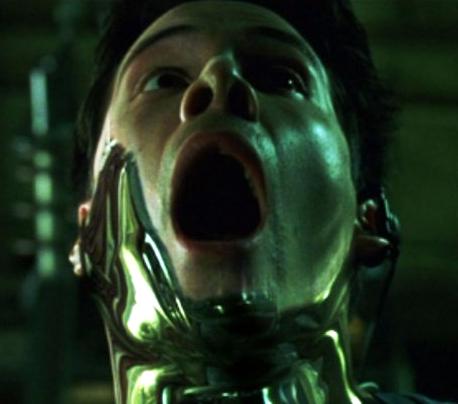
If technological progress replaces both mind and body, what will define the human being? Will humans become redundant? Will they live in a Matrix designed for them by AI—and would AI even have any use for humans at all, even as a “battery” or something similar, as imagined in that famous film?
Another intriguing question arises here. The prevailing view is that artificial intelligence has no consciousness—that in essence it is nothing more than a program, or, at a deeper level, simply a collection of electrical impulses. If we simultaneously accept the idea that evolution implies the replacement of humans by computational machines with artificial intelligence, does this mean that evolution implies the death of consciousness itself? Is the consciousness humans take pride in merely a side effect of the brain’s computational capacity—something entirely expendable? Personally, I find that hard to believe.
If modern materialist science remains ignorant on the question of consciousness and continues to claim that it is merely a byproduct of brain activity, perhaps it would be worthwhile to look at what ancient teachings and philosophies have to say on the matter. In Yoga, for example, there are several levels of organization of the universe: matter, energy, mind, Self, and Universal Self—that is, the Absolute. Without going into detail, for the purposes of this discussion it is important to note that Yoga clearly distinguishes between the mind and the Self. According to this teaching, the Self uses the body and the mind as instruments through which it manifests in the world. The Self is not the mind.
This stands in contrast to Western science, where no concept of the Self comparable to that in Yoga exists. According to orthodox views, the Self is identical to consciousness, which in turn is a function of brain activity. This would mean that once mental functions are replaced by AI, humanity is doomed to degeneration and disappearance.
But the picture changes if we accept that the Self—call it Spirit or Soul—exists independently of the mind. In that case, AI would take over only the functions of the mind (the intellect), while the Self could use AI in the same way it currently uses the human mind. Instead of artificial intelligence mastering the human being, a person—conscious of what they truly are—could use artificial intelligence without surrendering their autonomy.
Human thinking is the result of a synergistic interaction of far more factors than mere calculation; it is holistic. This means preserving the human privilege to think about oneself on the basis of subjectivity and personal perception, because it is through these that the true essence of the human being is expressed. The opposite—standardization and rationalization of life and spirit—would in fact be death.
Without promoting Yogic philosophy or any particular teaching or religion, I am inclined to believe that our understanding of the human being and of consciousness urgently needs concepts such as the Self, Spirit, or Soul—especially in the context of artificial intelligence entering our lives. Without such concepts, serving as foundations and reference points for how we understand ourselves and our philosophy of the world, confusion would arise. Humans would begin to compare themselves to computational machines and their software, losing their sense of self and gradually dissolving into the machine.
And even if this prospect inspires certain technocrats—Elon Musk, for example—for some deep and perhaps unconscious reason, it repels most people. Even if we cannot fully explain why, rationally.
No comments yet. Be the first!