



Media
2 January 2026
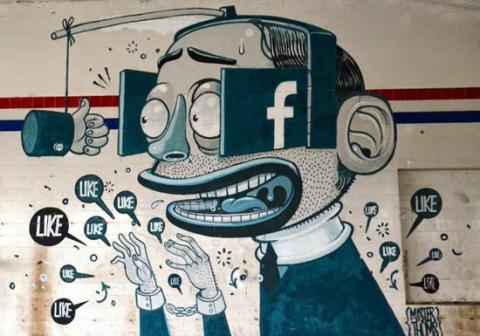
Convergence with Facebook?
There are no longer any independent mass media. And those outlets that still remain independent are not mass media—their voices are drowned out by the overwhelming roar of the mainstream.
Media are a powerful psychological and social instrument. It is no coincidence that they are often called the “Fourth Estate”, due to their ability to shape public opinion, thinking, and attitudes. Media act as a filter through which societies interpret and perceive reality. They play a decisive role in constructing the mainstream framework that defines public discourse.
They suggest.
They influence.
They direct.
And this is an entire science.
Media are easy to capture and control—even when they are not formally privately owned, but publicly or state-funded.
In the United States, 90% of the media are owned by just six corporations.
Through various mechanisms—enforcing a dominant culture and behavioral line, peer pressure, propaganda, self-censorship, financial pressure, corruption, dependency-building, dismissal, or forced resignation—any tendencies that contradict the imposed narrative are systematically eliminated. Journalists are gradually pushed to betray their professional duty and reduced to mere service personnel for those who control the media, acting as conduits for their interests and influence.
Can we then expect the media to select and report news impartially and objectively?
To contribute to the development of civic culture by responsibly setting the agenda of public discourse—always in defense of the public interest, rather than that of sponsors or owners?
Unlikely.
They say that one image is worth a thousand words. How much, then, is an image worth when it illustrates a front-page headline? Or the headline itself? How can we measure the effect of words and images—used skillfully and subtly in the service of propaganda and manipulation?
On top of this, advertising has taken over the media. Advertisements can also function as carriers of hidden messages—especially in their “personalized” form. It is striking how respected media outlets with decades-long histories have succumbed to advertising pressure, their websites now saturated with intrusive banners pushing content that has nothing to do with their journalistic identity.
Online media are further occupied by armies of trolls, produced in so-called “troll factories”, coordinated by various centers and serving specific political and economic interests. These trolls are a key component in strategies aimed at controlling public discourse, manipulating opinion, and influencing society. They employ psychological methods designed to derail meaningful discussion and inject targeted suggestions into public space.
Later in the book, we will examine these methods in detail.
At times, the line between journalists and trolls becomes disturbingly thin and increasingly blurred. Online forums—when carefully moderated and guided—turn into powerful tools of influence. As such, they acquire political and financial value in certain opaque markets.
Online media combine articles, images, videos, comments, links, recommendations, advertisements, forums, personal profiles, and messaging features. This makes them an exceptionally powerful instrument of psychological influence operating across multiple channels—including personalized influence based on user profiling—with a synergistic effect on individual psychology.
We should not forget that everything for which platforms like Facebook are criticized can also be done by any online media outlet: sorting news, selecting images and headlines, tailoring recommendations, serving targeted ads, and shaping visibility. Media have always been businesses with public influence. But with the rise of digital technologies and new mechanisms for shaping both collective attitudes and individual psychology, this business has evolved into an institution—a central lever for steering social processes.
With this transformation, the hope that media might genuinely represent civic positions and voices has largely died.
Instead, media have become platforms for psychological programming.
No comments yet. Be the first!