



Every Frog Should Know Its Pond
2 January 2026
Peter was stretched out on the living-room couch, while above him his thoughts hung like storm clouds. Slowly they flowed into one another, trying to take on a concrete form and concept—namely, that of the book he longed to write. The theme concerned individual freedom and the system, and their clash, in which—alas—the system more often prevailed. A system undermining democracy on a global scale and threatening individual autonomy.
So far, only the dramatic nature of the work was clear; everything else remained elusive in the fluid dance of thoughts, emotions, and ideas—shared only with Milena, his wife, during several attempts at brainstorming. There was also a rough outline: a chaotic collection of phrases and ideas thrown into a text file on his laptop, and that was all. And so thoughts about the book surfaced in his mind during almost every free moment—like now.
As Peter tried to hold onto some more concrete shapes in his consciousness, the ringtone of his mobile phone rudely scattered everything in his head. The name on the screen caused mild surprise. Stanislav was not among the friends he spoke with often, let alone saw frequently. Time had turned close school friends into acquaintances who occasionally crossed paths through other mutual contacts. In the nearly twenty years since their graduation ball, the divergence in their life paths had inevitably affected their relationship.
While Peter’s professional development had docked at the modest harbor of editor in the culture section of one of the few remaining independent online publications, Stanislav had built a career in the banking sector and was also running some businesses. Over time, their shared context had shrunk considerably—though not to the point of complete estrangement.
Was there a hint of falseness in the friendliness of the voice on the other end? Just normal courtesy between people who are no longer that close, Peter thought. After the usual exchange of assurances that everything was fine—at work and in the family—Stanislav got to the point:
“Pesho, I’ve been meaning to call you for a while now, to meet for a coffee or something… I wanted to ask you about a project—whether you could help me with the PR side… and also just to talk like old friends, about various things. We haven’t seen each other in ages. You know how it is with constant postponing—there’s always a reason. Anyway… how are you for time these days? Could you find two or three hours?”
“Of course, Stani, sure… I’d be happy to catch up,” Peter replied readily.
“Great!” Stanislav sounded as if this were the best news he’d heard in a long time. “What do you say to Bar Imperial—you know where it is?”
The bar was one of the most snobbish places in the city, and Peter felt slightly uncomfortable during the few times he had ended up there, but there was no way to refuse.
“So, Wednesday at six—I’ll be waiting for you there! Have a nice evening and see you soon!” Stanislav ended the call cheerfully.
Peter set the phone down and wondered what kind of project this could be, and why Stanislav had thought of him for PR, given that his experience as a media editor had little to do with the PR sector. Something didn’t add up. Soon, however, he shrugged it off and his thoughts shifted to the next day’s mountain trip. He, Milena, and a few friends were planning a several-hour hike along the ridge. It would be a pleasant, refreshing walk—an immersion in the pulse of mountain spring.
From the very beginning of their relationship nearly a decade ago, Peter and Milena rarely stayed in one place on weekends, seizing every opportunity for a small or larger adventure—a dose of dopamine in their otherwise routine lives.
Peter glanced at his watch. Five to six. Bar Imperial was half empty, if not more. The evening hadn’t begun yet. A few bored, long-legged waitresses were taking advantage of this, lounging around the bar. Dark-lacquered wood, leather furniture, dim lighting, and the scent of perfume, cigars, and high prices—this was Bar Imperial.
There was no need to look around for long; Stanislav had already spotted him and was waving broadly from a leather sofa in a booth opposite the entrance. His suit looked tight and stretched, making Peter think Stanislav had added a few more kilos to his already excessive weight.
“How are you, man? You look great!” Stanislav’s radiant smile seemed reserved for his closest friends. “How long has it been since I’ve seen you, buddy! How are things going—sit down and tell me!”
“I’m good, Stani, can’t complain,” Peter tried to match his tone. “How about you—business going well?”
“More or less, surviving the market’s whims…” Stanislav shrugged. “The usual entrepreneurial troubles. What can you do? So—what’ll you have to drink?”
“Uh… maybe a beer.”
“Come on, beer? When was the last time we saw each other—two, three months? Or four? This meeting deserves a proper celebration! How about something stronger? Whisky? Two large Chivas, 25-year, with soda… lots of ice. And smoked almonds and cashews.”
He called out to the waitress before Peter could even catch his breath.
“My treat,” Stanislav added in a tone that allowed no objection.
For the next ten minutes, Stanislav showed such deep interest and concern for Peter’s life and family that Peter felt slightly embarrassed by the excessive goodwill.
“With you, Pesho, we may not see each other often, but old friendship doesn’t rust, you know… Nothing’s changed between us since school—at least not for me, and I know it’s the same for you.” He looked expectantly for confirmation. “New acquaintances are shallow, but childhood ones last a lifetime. You’re the only one I can talk to about serious, deep topics. I’m surrounded by simple, primitive people—interested only in money and schemes. They can’t hold a candle to you in knowledge or culture. It’s all money and prostitutes for them… every month Thailand or Vietnam—but ask them who Buddha is and they won’t know. I swear…”
He sighed.
“Two more Chivas, please!”
“So, how’s work? Pay okay?” Stanislav asked again as the waitress brought the glasses. “Where will you take Milena this summer—Bulgaria or abroad?”
“We haven’t decided yet. Maybe Greece for a week or two,” Peter answered casually.
“A week’s not even worth it—and Greece has really gone downhill, unless it’s certain islands where it still makes sense,” Stanislav said disdainfully. “The peasants flooded everywhere and ruined the nice places… Everyone’s exporting themselves to Greece or Turkey—no end to it. On the beach you mostly hear Bulgarian speech—thick dialect—might as well be in Harmanli or Polski Trambesh.”
Peter tried to look understanding.
“This anarchy spreading among the population is about to collapse the state. Everyone wants foreign vacations, new cars, perks—the soft part of the bread. Every cripple and nobody wants rights, but no one cares about duties!” Stanislav’s tone had become sharp. “Our grandparents didn’t vacation all-inclusive in Turkey and Greece, did they? No—they bent their backs in the fields. Women reaped with children on their backs! They had values, morals! And today people have forgotten how to work! Too many chiefs, not enough Indians! That’s no way to run a state!”
“Well… it’s normal for people to want a better life,” Peter managed during a brief pause.
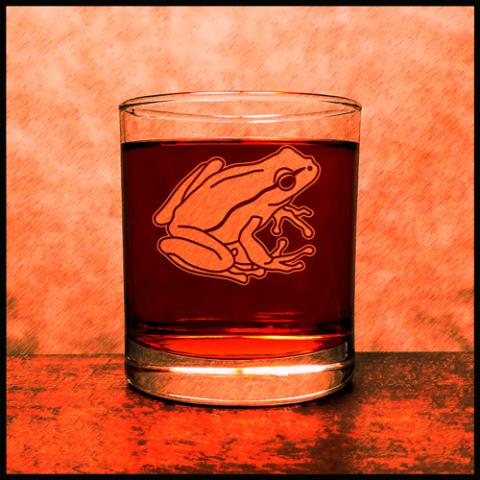
“Peasants can’t want to live like aristocrats,” Stanislav cut him off. “It doesn’t work. Every frog should know its pond. Only when everyone knows their place will the country move forward. Some will set directions, create, succeed, earn, live—and others will work. It’s always been that way and it always will be.”
Peter decided it was best to remain silent.
Suddenly Stanislav leaned toward him, adopting a serious, conspiratorial look.
“Look, Peter, since we’re old friends and I trust you completely, I invited you here to propose something. It’s not exactly PR in the classic sense—but something similar. These things aren’t offered to just anyone—only trusted, high-quality people. We’re talking about good money, and not just once.”
He studied Peter, paused, then continued before Peter could respond.
“There are people—responsible people—at high levels, who’ve decided to do something so we don’t disappear from the map. To rein in this anarchy where everyone says and does whatever they want. To give a path to the capable.”
“A coup, then?” Peter joked weakly.
“If only a coup were possible… A Pinochet would do a wonderful job. No—it’s not possible. These times require subtlety. The people must be nudged and guided cleverly and quietly, through all possible channels.”
Peter watched with slightly raised eyebrows.
“There’s much more to say, but later,” Stanislav continued cautiously, watching Peter closely. “There are moments in life when everyone must make certain decisions—choose a side. Define themselves… and then things develop… one way or the other. You understand.”
After Peter finally looked away, Stanislav continued:
“Everyone must contribute at their level if we’re to become a real state instead of this open yard. The conscientious don’t go unnoticed…”
He stared as if analyzing the slightest twitch in Peter’s facial muscles.
“You, for example—as a media editor—would you want your outlet publishing nonsense from lunatics who poison people’s minds? Probably not. But without explicit policy from the owners, what can you do alone? Nothing. But if there are people who can provide quality materials—why not give them space?”
“In your media, all kinds of authors are published, and editors play a decisive role in what sees the light of day, right?”
“In principle, yes, but—” Peter hesitated.
“You have the final say in your section. So why not promote valuable materials that educate society and affirm the right values? You’re Bulgarian—you care about the country’s future, don’t you?”
“Yes, but our policy is to give a platform to a broad spectrum of views—to maintain pluralism,” Peter said cautiously.
“Pluralism—nonsense,” Stanislav snorted. “This chatter only drags us deeper into chaos. People are like children—they must be educated, have the right values hammered into their heads. Gently, nicely—and if needed, with a little stick. Methodically. Persistently. As much as necessary.”
“There are still people who believe in democratic values and civil society,” Peter couldn’t help saying. “They wouldn’t agree that society should just be a herd.”
A tense silence followed.
“Some individuals live in delusion,” Stanislav resumed. “They think they serve a good cause, but they actually harm. Idealistic motives—but the road to hell is paved with good intentions. They spread harmful ideas, post on social media…”
He paused, then continued pointedly:
“…and some losers even try to write books to share their deranged thoughts!”
Stanislav stared at Peter. Not a trace of friendliness remained.
“These things don’t go unnoticed. There are influential people—responsible, strong, with vast networks and unshakable will to impose normality at any cost. Hard men—not political softies. You understand.”
“I suppose…” Peter muttered through clenched teeth.
They stared at each other, waiting for someone to blink.
“How’s Milena, by the way—you getting along?” Stanislav suddenly changed tone. “I’m sure you are, and honestly, I’m glad. Family problems are increasing—arguments, affairs… especially when someone loses their job. Crisis times.”
“We’re fine,” Peter replied coldly. “We share hobbies that strengthen our bond—for example, we hiked in the mountains the other day to shed a few extra kilos.”
He glanced pointedly at Stanislav’s belly.
“Great, fantastic!” Stanislav bared his teeth in a fleeting mock-smile. “Did you gather any dock leaves or nettles? Makes a great soup—and it’s free.”
“No.”
“Too bad…”
He checked his watch.
“Time flies—it’s almost half past seven and I just remembered an urgent engagement. I have to leave immediately. It was nice seeing you. Have a good evening.”
He stood, adjusted his suit, tossed a few banknotes on the table.
“No need,” Peter said quietly.
“I said it’s my treat. I’m off. Bye, man.”
At the exit, Stanislav turned back:
“Give my regards to your wife.”
Peter watched the bloated figure walk away and, for the first time in his life, understood why some people like weapons.
On his way home, Peter tried to disperse the storm clouds above his head, already flashing with lightning. Some ugliness in life couldn’t be avoided. Stanislav’s threats didn’t matter—nor how he knew about the book. What mattered were the things that gave life meaning.
With these thoughts, Peter unlocked the door and entered his apartment. Milena was already home, watching TV on the couch.
“Hi, love,” she said. “You look tense.”
“Probably. Met an asshole. The world we live in…” Peter began, then stopped.
“Well, we can’t fix the world,” Milena said evenly. “Change and then we can talk, if you want.”
As Peter headed toward the bedroom wardrobe, she called after him:
“There’s a surprise in the kitchen cupboard. Helps calm the nerves.”
After changing into his home clothes, Peter went to the kitchen and opened the cupboard.
His gaze immediately locked onto an unopened bottle of Chivas Regal, 25-year-old.
Boyan Taksirov
No comments yet. Be the first!