



Capitalist Ideology for the Future Successful
4 January 2026
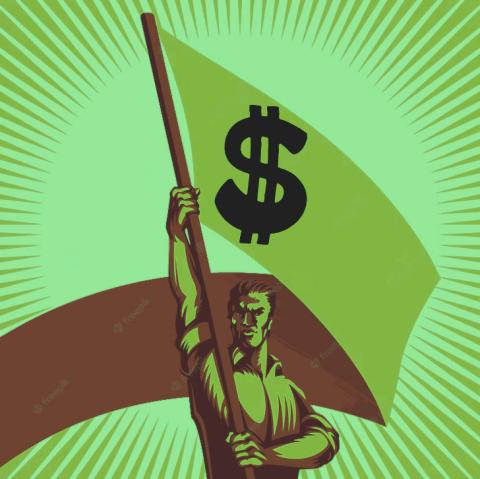
Some time ago, I read that in the United States there are no poor people—only people who have not yet become rich. Those who are not rich yet are constantly told that if they are hardworking enough, persistent enough, and entrepreneurial enough, success is inevitable. It’s only a matter of time. If they haven’t made it so far, that simply means they weren’t good enough and didn’t deserve it.
There are courses that teach precisely these positive attitudes toward success, and they are a good business for the people who organize them—who, incidentally, practice what they preach. But this is not just about business. It is about the promotion of an ideology. An ideology without which modern corporate capitalism would hardly be possible.
Under this system, capital becomes increasingly concentrated: the rich get richer, and the poor get poorer. Such an order needs a mechanism to minimize public dissatisfaction with growing inequality, injustice, and powerlessness. Otherwise, left-wing and socialist ideas would naturally gain ground—something global financial elites cannot afford to allow. Capitalist ideology functions as precisely such a mechanism: it prevents discontent and maximizes the exploitation of the masses.
Its core messages are roughly the following:
- So far, a person has been poor because they did not deserve a better life
- With enough hard work, faith, persistence, and entrepreneurship, success is guaranteed
- If someone still fails, it means they are simply not good enough and should know their place
- The welfare state creates spoiled individuals and leads to decay; humans are not meant to live in security and comfort
Many preachers of this ideology find a platform in the media. One such example is the well-known Canadian Jordan Peterson, who tirelessly attacks the “immorality” of socialism while teaching young people how to live, how to succeed—or, depending on the case, how to accept their place—how to believe in God and be good, “moral” citizens.
As unbelievable as it may sound, this propaganda works—not only in the United States, but also in some former Eastern Bloc countries. In the U.S., however, the examples are particularly striking. Many poor people hold far-right views and oppose left-wing policies that would actually benefit them.
Why are these attitudes so absurd? Because, believing in capitalist ideology, they assume they will soon become rich. And when they become rich, they won’t want to pay high taxes! Just imagine it: they finally achieve wealth—and then the government raises taxes and takes it away from them!
A classic example of this mindset can be seen in reactions to Barack Obama’s plans to create more affordable health insurance for people in need. As we know, healthcare in the U.S. is not a social service but an extremely expensive commodity, sold at massive markups to those who can afford it. A pill that costs 2 dollars elsewhere in the world may cost 2,000 dollars in the U.S. (yes, two thousand). Giving birth reportedly costs around 10,000 dollars—and on top of that, the right for the mother to hold her baby afterward comes at the “perfectly reasonable” price of 80 dollars.
Calling an ambulance costs around 2,500 dollars—if it hasn’t gone up since. I remember a TV show where an interviewer asked an American woman whether she would like ambulance services to be free, as they are in most other countries. The woman answered proudly and instructively:
“Ma’am, the truth is that nothing that’s free is worth anything.”
Against this background, when Obama proposed affordable health insurance, the area in front of the White House—or maybe the Capitol, I don’t remember exactly—filled with poor protesters. Potential beneficiaries of the program, holding signs that read things like: “Hands off MY healthcare.”
I explain this useful idiocy through the capitalist ideology promoted in the U.S. Through it, several goals are achieved:
- Discontent with the system is neutralized, and tolerance for worsening living conditions increases
- “Useful idiots” are created—people who act against their own interests
- People are pushed to work more, locked in a brutal rat race
- Social solidarity is destroyed
This ideology corrupts the poor—not with money, but with hope. The hope of becoming rich. If a poor person does not see themselves as poor, but as a “future rich person,” they will not identify with others in the same position. In the name of that hope, they will endure exploitation, deprivation, and injustice—and still remain politically “right-wing.”
No comments yet. Be the first!