



Basic Characteristics of Organized Manipulation on the Internet
2 January 2026
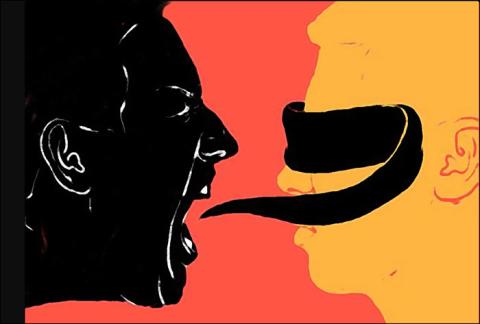
In most cases, trolls are not teenage outsiders compensating for their frustration, complexes, and dissatisfaction through antisocial and irritating behavior online. More often, they are trained and paid individuals who carry out targeted and organized activity in the service of certain interests. Nor are trolls always aggressive or intent on vulgarizing and emptying discussions of meaning. In fact, the term “trolls” frames paid manipulation only through its most visible and destructive manifestations, while manipulators do not always act in this way. Often they are highly educated, intelligent, possess erudition and communication skills. Some of them ostensibly defend popular, moral, and socially attractive theses, while the manipulation is insidiously concealed between the lines.
That is why in this book the concept of “trolls” is used in a broader sense, encompassing individuals who employ the entire spectrum of psychological influence—both overtly destructive and covertly manipulative. Since this manipulative group can also include many other actors operating within their own domains—such as journalists, bloggers, influencers, and so on—the group of online manipulators has blurred boundaries, spilling over into different activities and areas of communication, both online and offline. Consequently, the methods and techniques presented in the following chapters are universal manipulative practices with wide online applicability.
Despite their universal use, these methods are included in the book because they belong to the arsenal of organized manipulation, which is employed strategically to influence society, public discourse, and the individual.
Organized manipulation today can be found almost everywhere, but perhaps some of its most characteristic environments are online media outlets. There, the combination of texts, images, comments, personalized recommendations, and targeted advertising creates favorable conditions for complex influence over the individual—both at the conscious and subconscious levels. Of course, this does not mean that every online publication is a platform for manipulation, but some outlets function as such to a greater or lesser degree.
Due to its mediated nature, the virtual environment is ideal for all kinds of manipulation. The individual cannot have an objective picture of what is actually happening on the internet. The absence of sensory perception of participants and their anonymity create conditions for all kinds of psychological games, where there are no clear rules or boundaries. In this environment, manipulators can construct and stage all kinds of “reality” through various techniques—playing roles and performing theaters in countless combinations, imitating normal participation, and thereby suggesting a false picture of real public attitudes and processes. Ordinary thinking participants can easily be discouraged from participation through various methods of emotional pressure, which in some cases may even be reinforced by the use of personal data, abused for the sake of more effective influence.
The collective organization of trolls presupposes the application of various psychological tactics and scenarios—for example, the familiar “good cop / bad cop” routine, or staged pseudo-disputes with manipulative direction. In this way, the unsuspecting reader may be left with the impression of a real, genuine discussion, rather than a controlled and steered one, and thus be misled and subjected to specific suggestions.
At times, trolls in their comments may reinforce the messages embedded in certain journalistic materials, forming a toxic combination with journalists who fulfill particular assignments and have nothing to do with honest, objective, and independent journalism. Not infrequently, trolls also communicate with one another indirectly through forum posts. Their metaphorical communication is highly developed, since metaphors are often used as tools of psychological influence.
This scale and organization are possible because trolls are a relatively cheap resource. Let us not forget that they are entirely affordable for agencies and corporations. Only the intelligent and well-educated manipulators are highly paid, while the mass of low-level trolls is caught in the so-called rat race, striving to prove themselves to their “employers.”
One of the most important characteristics of online manipulation is its repetition and methodical nature. In the realm of the human psyche and soul, nothing works on the first attempt. What is required is prolonged, persistent, and systematic work in order to influence the consciousness and attitudes of both the individual and society as a whole. And the will to do so clearly exists.
In the following pages, we will become familiar with some of the main techniques in the manipulators’ and trolls’ arsenal. You may already have encountered some of them, while encounters with others may still lie ahead. The methods presented are framed in the context of shedding light on organized manipulation carried out by various political circles and centers. Trolls who use such methodologies rarely act independently; they are merely instruments serving specific policies and strategies aimed at social control and manipulation. Given the ever-expanding penetration of organized manipulation into all spheres of public life, it is useful for individuals to be familiar with the most commonly used methods of influencing people and their behavior. Awareness of what is happening leads to recognition of the problem, its entry into public discourse, and the gradual emergence of social reactions and solutions that shape the future. Moreover, understanding the arsenal of psychological influence is absolutely necessary for building defense mechanisms and immunity against it.
No comments yet. Be the first!