



The “Civilized” Human
2 January 2026
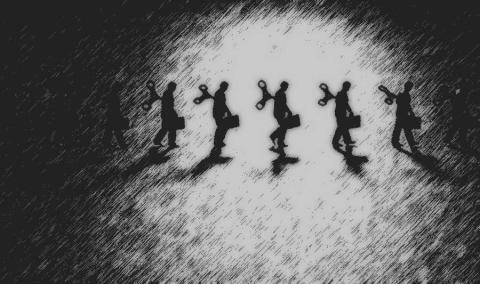
The analogies between the everyday life of the civilized human and that of a laboratory rat are no coincidence—and no wonder they are so popular. It seems that civilization (or at least this civilization), in its pursuit of ever-greater “achievements” and “efficiency,” does not need fully realized human beings, but rather trained little animals living by a schedule, to the rhythm of the second hand on the clock. Narrowly specialized, standardized, and profiled creatures. If the ordinary employee performs a series of routine, repetitive actions every day in order to secure their own survival (and possibly that of their offspring), what really distinguishes them from a laboratory rat pressing buttons to receive food?
Values?
Few would object to the claim that the only value driving the world is the interest of capital—the interest of the elites. Everything should proceed as they want it to, as long as the gears of the socio-economic machine spin faster and more “efficiently.” The wear and tear of the small human cogs and screws does not matter, because they are replaceable. That is why human resources are pushed to the extreme, and the means by which this human resource is motivated to endure constant overdrive and to tolerate it constitute an entire science.
Everything that is sacred to people—values, morality, traditions, ideology, religion, and so on—is subjected to instrumentalization[1]. It is used (or rather exploited) rationally, efficiently, and purposefully by social engineers. And, of course, with staggering hypocrisy—even when this process devalues those very things.
For this overdrive, the human pays dearly—almost always far more than their monthly salary. Today, conditions such as stress, depression, burnout, various psychosomatic illnesses, psychological instability, manias, addictions, lack of motivation, easy fatigue, impaired concentration (attention deficit), anxiety, constant worry, apathy, alcoholism, and other “blessings of Civilization” are considered normal—despite appearing to be directly proportional to the acceleration of life, stress, and pressure of the modern lifestyle. For the elites, these conditions—ever more tormenting for the average person—are even desirable, since they make people weaker, more dependent, and more controllable.
Of course, modern Civilization has “cures” for the diseases it itself causes. They are supplied by the pharmaceutical industry. It provides the population with the necessary medications and drugs to mute the symptoms of their disorders—without actually curing them. Thus, as far as these medications are concerned, the law of supply and demand is always in force. Just business, some would say, shrugging indifferently.
It is no coincidence that medications, drugs, and psychoanalysts are becoming ever more unavoidable in people’s attempts to feel normal. So unavoidable, in fact, that due to the massive use of Prozac in the United States, Americans ironically refer to themselves as the “Prozac Nation.” Perhaps a source of patriotic pride—for the manufacturers of Prozac?
Another example of the use of psychotropic substances as a policy to suppress the psychologically harmful effects of the environment is the “treatment” of the above-mentioned attention deficit disorder in the U.S. Ten percent of children in the United States (aged 4 to 17) suffer from it, impairing their school performance and dimming their life prospects. It has been established that the causes of this disorder lie in the children’s environment—most often among those from poor families exposed to stress. The disorder could be addressed by improving these children’s living conditions through social programs. Instead, they are treated with psychotropic substances.
As one of the prescribing doctors notes, it is too expensive for society to invest in improving the conditions of children from poor social strata, so a cheaper solution is chosen—namely, the use of psychotropic substances whose effects resemble those of certain drugs, such as cocaine. These substances, of course, have side effects, which can be long-term and sometimes very serious: tendencies toward depression, irritability, obsessions, autosuggestion, unprovoked aggression, and so on. Even more striking is the fact that a culture of constant competition and fear of “falling overboard” leads to the same medications being prescribed to healthy children in order to improve their school performance (Schwarz, 2012).
Since people are largely similar everywhere, the question of why this is happening—and what is wrong—points us toward the surrounding environment and conditions. What kind of environment must it be, in which, to keep up with the pace, one may well need to take psychotropic substances—to be a drug user? Perhaps we are dealing with an environment that relies on controlled psychological instability as a means of control?
Advertising, meanwhile, becomes ever more effective at pressing the psychological “buttons” that lead people to store shelves to buy a little joy or calm—calm they might not even need if they weren’t watching ads. But retail therapy has a short-lived effect and must be repeated periodically. Like drugs, consumerism offers no solution to the problems of the “civilized” human—only addiction. Which brings profits to business.
Humans can become addicted to many things: drugs, alcohol, cigarettes, sex, food, sports, gambling, TV series, shows, sports broadcasts, and other activities and substances that flood the brain with adrenaline and endorphins. The tendency toward addiction is part of human nature. Why, then, shouldn’t addiction be used for profit and control—especially when the “hooks” by which an individual can be caught and led are well known?
Is the connection between humans and laboratory rats becoming clearer? Well, for those who don’t like rats, we can use hamsters instead—they’re cuter. And they have a habit of running in a wheel. That’s energy that can already be put to use.
Almost always, the hamster-in-the-wheel analogy is associated with the senseless pursuit of more money—greed and careerism. In most cases, however, it’s about a breathless pace imposed simply by the need to survive and meet basic needs so as not to fall out of the system. Much more rarely is it about racing out of greed, despite the popular association. Most often, people run in the system’s wheel out of necessity. For most, the primary force that overcomes fatigue and demotivation is not the drive for achievement, but fear of social exclusion, insecurity, and automatism.
Thus, the system is fed with energy—and those feeding it are too busy keeping pace to try to do anything to slow that pace down.
Under this regime, it’s no wonder that the civilized human is fragmented in their thinking. Before grasping one topic, they already move on to another—much like aimlessly flipping through TV channels. They are superficial, lacking the will and concentration to penetrate the essence of phenomena, living in a world of appearances handed down from above. Life proceeds by habit, by inertia. Many people feel as if their essence is scattered—and even if they want to gather themselves, to focus, they often cannot, due to stress, problems, and distractions. The imposed rhythm of life disrupts the integrity of the individual and inhibits development. Dissatisfaction is usually formal and passive—expressed most often by a shrug and the phrase: “That’s life.”
For many, youthful dreams and impulses have given way to more pragmatic and reasonable goals: buying a home to be paid off over half a lifetime, saving for retirement, servicing loans, and other meaningful, economy-friendly pursuits that nearly fill life and consciousness. One has “grown up” and “become wise.” There’s no time for “head in the clouds”—you’ve got to work.
Even in the closest human environment—the family—there is often banalization and alienation. The domesticated family stereotype promoted by the entertainment industry (ads, films, series, shows…) is imposed on reality and shapes family relationships. Today, the mass-culture image of the “modern family” features “happy,” foolishly grinning mom and dad, two kids, a dog, a mortgage, more loans, lots of work and obligations—cheerfully serviced. Everything in bright colors, lots of happiness, joy, and smiles.
But reality beyond these templates offers mostly alienation, problems, or simply apathy. In his novel Fahrenheit 451, Ray Bradbury depicts not only a world where knowledge is persecuted, destroyed, and replaced with advertising noise and propaganda. He depicts the emptiness in human consciousness produced by the absence of knowledge—the inability to think, to realize, to feel. That emptiness renders human contact meaningless, reducing it to an empty ritual. In describing the alienation, standardization of relationships, and the impossibility of genuine communication between Montag and his wife, Bradbury makes us suspect he had a crystal ball—one in which he saw today’s world. Or tomorrow’s. Leaving supernatural speculation aside, we can conclude he was simply skilled at extrapolating from his observations of American society and its trends.
A similar interpretation appears in the Austrian film Life Guidance (2017), which portrays the falseness and psychological violence of a society seemingly just one step ahead of today. In this dystopian reality, the system penetrates even the most intimate family relationships and destroys them—along with all feelings between partners—leaving only a standardized, hollow shell of training, habit, and pretense.
The image of family imposed by media, entertainment, and propaganda increasingly turns it into an instrument of social control, replacing natural personal relationships with standardized behavioral models, roles, and expectations. Some today call this culture and civilization—and justify it as necessity.
The civilized human is, in fact, the so-called mass human. They are fitted with the straitjacket of mass, group identity, while their own identity is denied and condemned as “individualism” (usually extreme). Increasingly, individuals are expected to identify with their profession, income, and place in the social hierarchy—living (and thinking) according to behavioral models assigned to their class (is it still exaggerated to say caste?). Personalities seem to be disappearing; conformism prevails; individuals are reduced to their roles. How many people truly have the opportunity and the will to “be themselves” and resist the molds the system imposes through living conditions, daily routines, propaganda, social pressure, and suggestion? It’s easier to dissolve individuality into a role, a behavioral model, a community, than to defend it. The mass human—with template behavior, stereotyped communication and emotional expression, standardized interests, and unrecognized unfreedom—becomes the “dominant” species.
But the truly dominant ones—the “architects” of this mass human—remain in the shadows.
Collectivist propaganda attempts to give meaning to individual existence and comfort to despair by shifting focus away from the individual toward some ideology. It increasingly insists that the individual, with their annoying, egocentric subjectivities, does not matter—the community, the idea, the whole does.
By provoking a sense of community—more precisely, belonging—individuals are invited to find comfort not within themselves but in the whole, to identify with it, dissolve into it, merge with it. Then the striving for freedom and self-determination loses meaning, as does the sense of justice. Belonging is not especially compatible with human rights: it is collectivist, while human rights are individual. What human rights can there be if you belong? What matters is the whole—not the individual grains of dust. Or perhaps ants?
And yet, the vague feeling that one has been “screwed” by the “system” always hovers somewhere in the mass human’s consciousness, never fully disappearing—even when that “system” cannot be clearly defined, nor a culprit named (what culprit? everyone’s responsible for themselves, right?). Thus, discontent sleeps a shallow, restless sleep—ready to awaken.
And it does awaken. Or it is awakened—from time to time—at a public protest, within a scheduled time slot. Say, from 18:00 to 22:00. Or at a football match. Pressure must be released—but carefully and in a controlled way. So life can go on. Just like a favorite TV series.
Taken together, everything looks highly synchronized, calculated, engineered: stress, fatigue, hopes, disappointment, impossibilities, problems, anger, violence, outrage, deprivation, lack of focus, protest… These are merely variables in a social equation whose solution is positive for the elites—and deeply negative for everyone else.
Doesn’t this civilization increasingly look like a bad deal?
Nonsense. We are civilized people and we have values. We sacrifice ourselves for the Homeland, the family, the children. And the future.
Politicians know this very well. The future and the children are their mission—their bussiness.
The present—not so much.
[1] Instrumentalization — the use of a value, concept, belief, or idea as justification for certain actions and for achieving goals that do not correspond to the idea’s original meaning—most often self-serving. The exploitation of values.
No comments yet. Be the first!