



How YouTube Pushes Our Buttons – Part 1
4 January 2026

More than once I have warned about manipulation by IT monopolies through the personal data they collect about us. Anyone who uses the internet has left behind massive amounts of information, from which a fairly precise psychological profile can be constructed—and, based on that, even future behavior can be predicted.
This is done by digital corporations, and they don’t even try to hide it. On the contrary, they often boast about it. Back in 2010, at the Techonomy conference, Eric Schmidt, former CEO of Google, predicted that “total transparency and the absence of anonymity” would be the future of the internet. He made the following statement:
“In a world of asynchronous threats, it is too dangerous for there not to be some way to identify people. We need a way to identify people by name. Governments will demand it.”
He then added:
“If we watch enough of your chats and your locations, and use artificial intelligence, we can predict where you are going to go. Show us 14 photos of yourself and we can identify who you are. You think you don’t have 14 photos of yourself on the internet? You have photos on Facebook!”
The assumption is that digital corporations know us better than we know ourselves. If that is the case, they could manipulate us rationally and emotionally, plant ideas, nudge us into reaching certain conclusions on our own, and so on. In short, they can push our buttons and program us to varying degrees, depending on our individual susceptibility and life circumstances.
This is done primarily through the services they offer—often for free. In many of these services, corporations present us with information that algorithms have determined we should see, based on our psychological profile. And, of course, based on the corporations’ own goals. Examples include how search engines work: search results, their ranking, autocomplete suggestions, recommendation systems on different platforms, targeted advertising, news feeds on Facebook, online political targeting, and so on.
Numerous experiments have shown that such information can have an emotional impact on the psyche and can influence thinking, judgment, and decision-making. This is a broad topic, already covered extensively in books and online. I explore it in detail in my book “The Hacked Brain” as well. Here, however, I will try to stay concise and focus on a concrete example. Examples are invaluable when it comes to exposing manipulation, because these mechanisms can be very complex, refined, and difficult to detect.
A detailed theoretical breakdown would probably bore most readers and leave the topic ignored—which would be a mistake, because it is both important and highly relevant. The example I’m about to give is clear and easy to understand. I would argue, however, that YouTube (part of the Google empire) manipulates users in far more subtle ways as well—based on individual psychological profiles, personal circumstances, desires, and fears.
Because all of this is strictly individual, such manipulation is difficult to prove. Even when explained in detail, it is often dismissed as paranoia or as a tendentious construction by an author seeking attention. This is one of the core problems of contemporary manipulation and psychological attacks: being individualized and association-based, they remain practically unprovable. Often, it is enough to “plant a fly in someone’s head.” If done correctly—if it hits a weak spot—that fly can buzz there for a very long time, and sometimes turn into an entire swarm.
Now to the point.
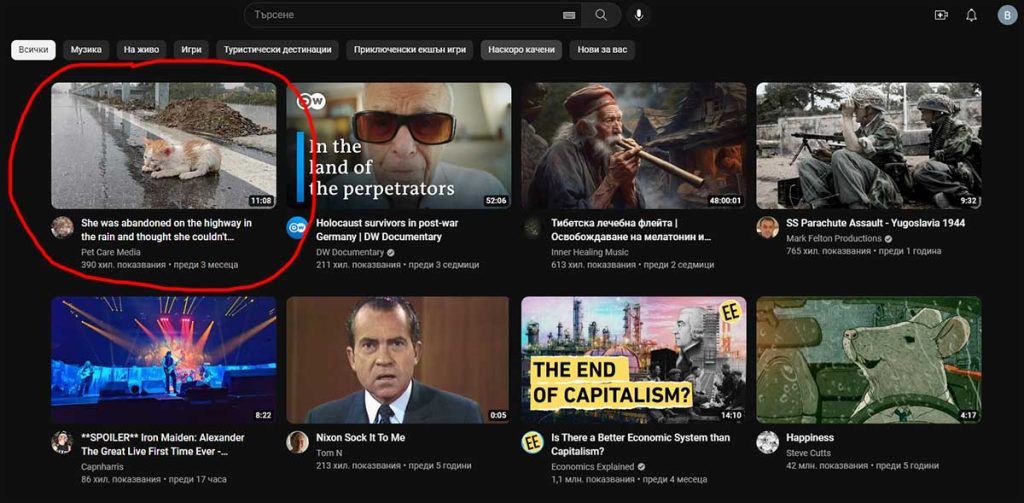
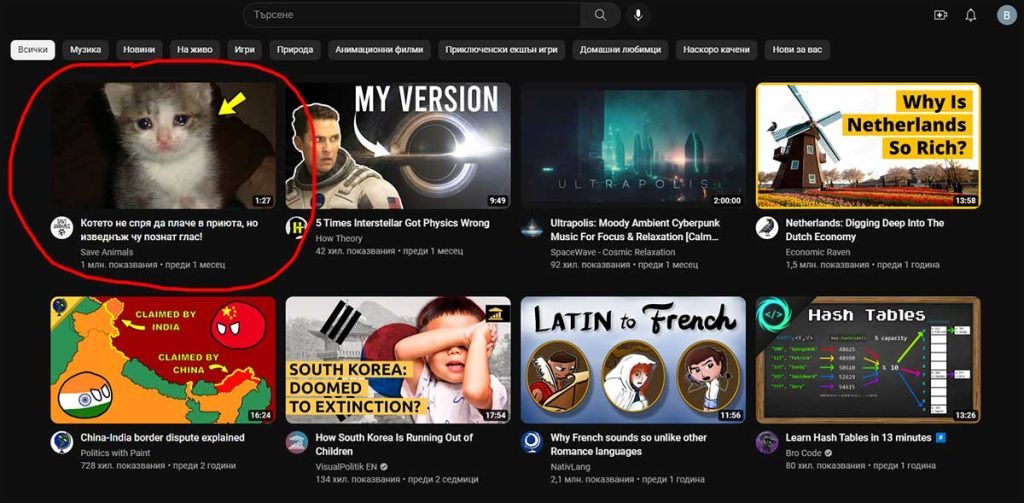
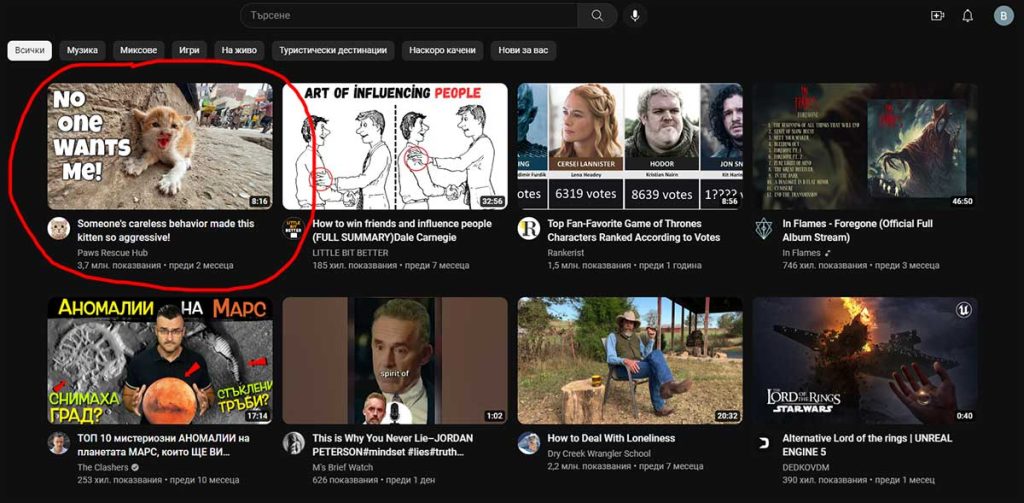
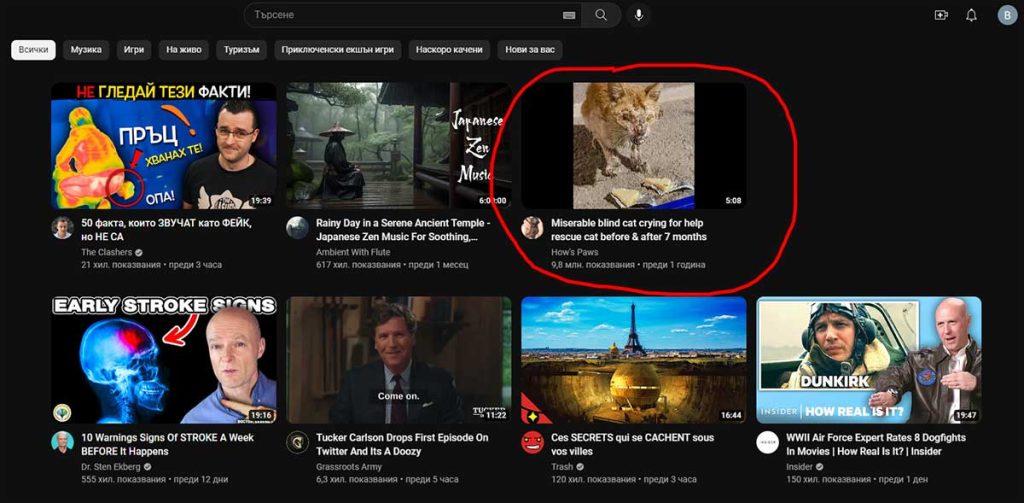
My wife and I have a tomcat whom we love dearly. For quite some time now—months, maybe even years—YouTube has been recommending videos to me featuring suffering cats in terrible condition. On the rare occasions when I have opened such videos, it was only to press the dislike button, hoping YouTube would stop bombarding me with emotionally distressing content. Unfortunately, this does not work. The platform continues to persistently recommend these videos.
Although the videos themselves and their creators vary, the scenario is always the same.
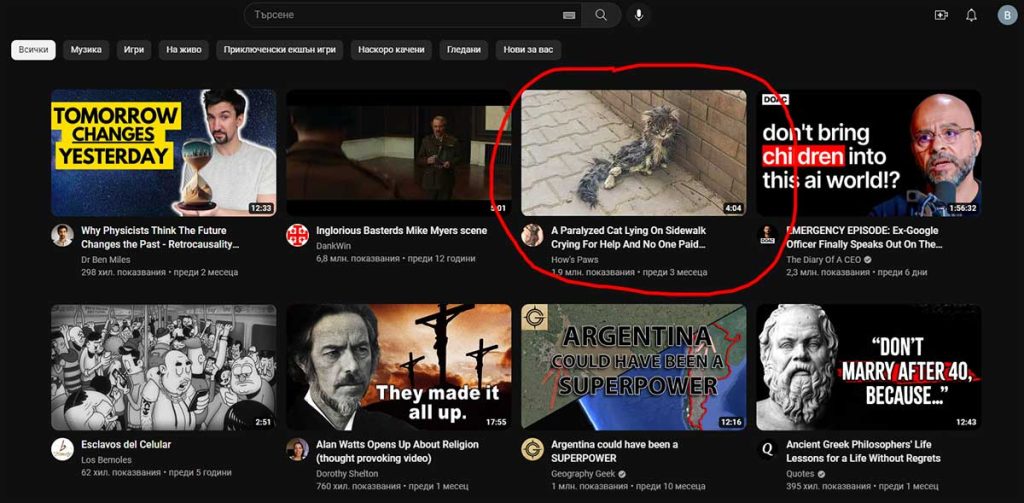
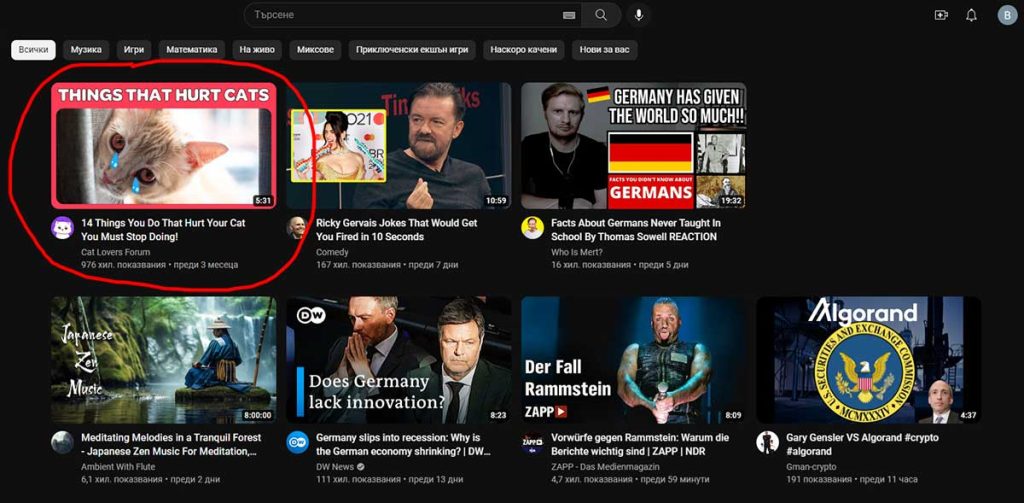
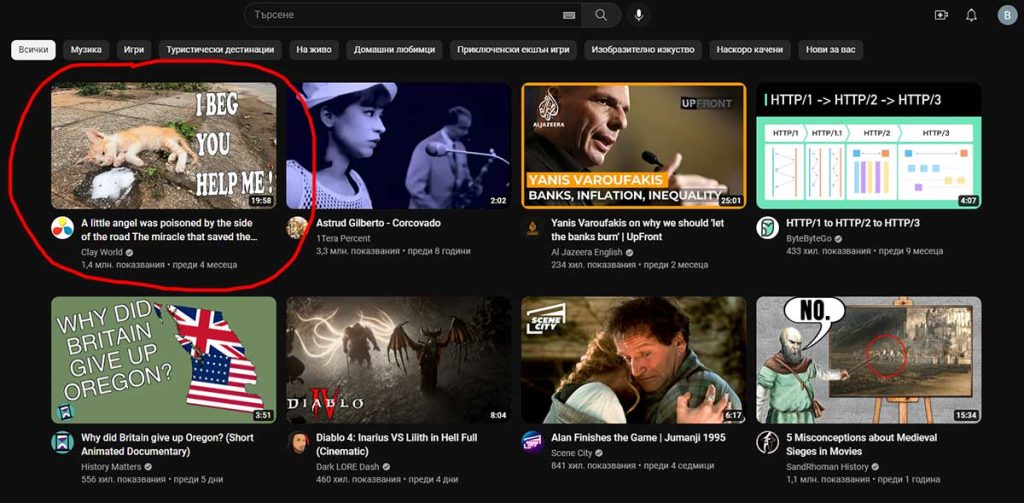
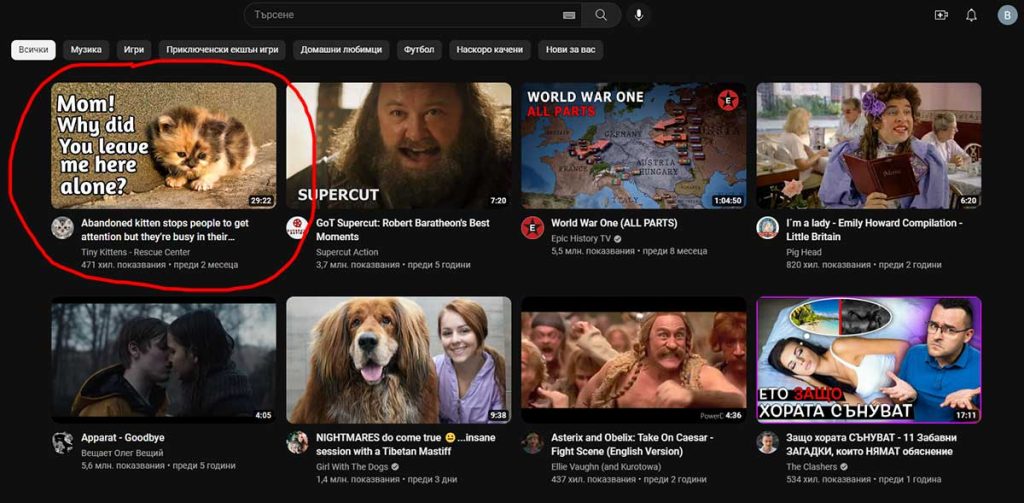
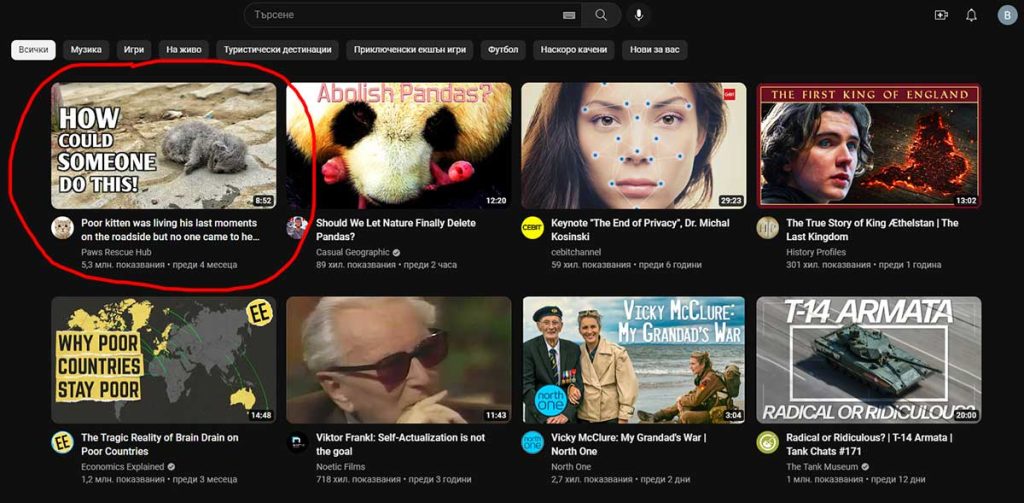
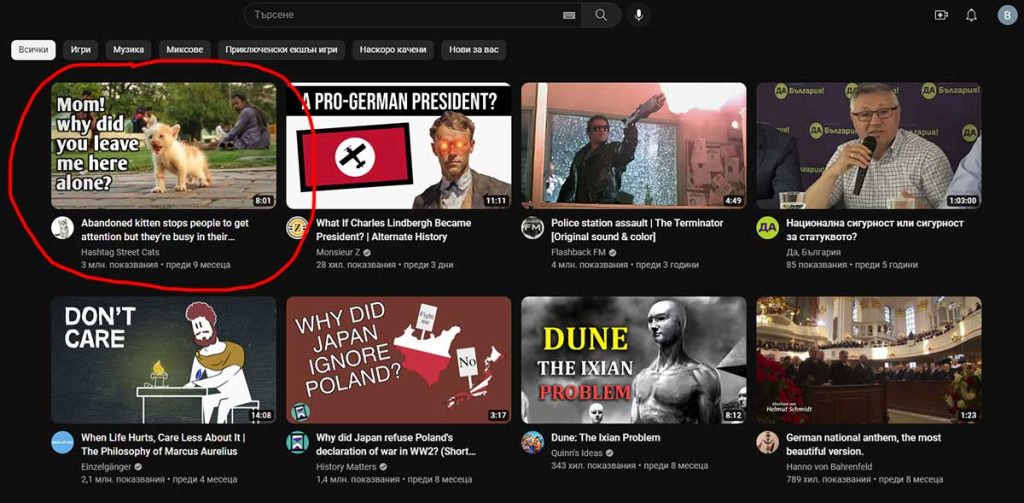
The thumbnail always shows a cat in miserable condition, looking sick or injured. The title is also highly emotionally charged, for example: “Paralyzed cat lies on the sidewalk crying for help, but nobody pays attention.” This is what such a thumbnail looks like:

There is no denying that such a thumbnail is disturbing. Naturally, no one would want to put themselves through watching something like this—even people who don’t own cats. The trick, however, lies in the predictable narrative. After graphically showing the cat’s horrific condition at the beginning, kind people appear, heal it, adopt it, and the story ends happily.
Faced with such a thumbnail, a person instinctively feels the urge to click—to make sure that, despite appearances, the cat is eventually saved and the story has a happy ending. Ignoring the video makes you feel like the heartless passersby who walk past the suffering animal, leaving it to its fate. Clicking it, on the other hand, fills your subconscious with distressing and traumatic imagery.
So why does YouTube do this? Is it trying to encourage people to adopt stray cats? I doubt it—especially given other manipulations and psychological pressures I have encountered on the platform. These are often much more subtle and difficult to prove, but many of them share a depressing and demotivating effect, even when they appear positive on the surface. The devil is in the details.
Perhaps, from the perspective of IT corporations, certain groups of people need to be suppressed. Perhaps this is a form of social engineering. Even the meaning of “social engineering” itself has changed over time. Originally, the term referred to designing society according to a specific plan—much like designing a machine. Today, however, it is commonly defined differently. One of the definitions circulating online reads:
Social engineering is a tactic used by cybercriminals to manipulate people into revealing personal information or sharing sensitive data. If you have ever received an unexpected phone call or email asking for your account details or personal identification number, you may have been targeted by a social engineering attack.
That, however, is a topic beyond the scope of today’s blog post, and one I will explore in more detail in future entries.
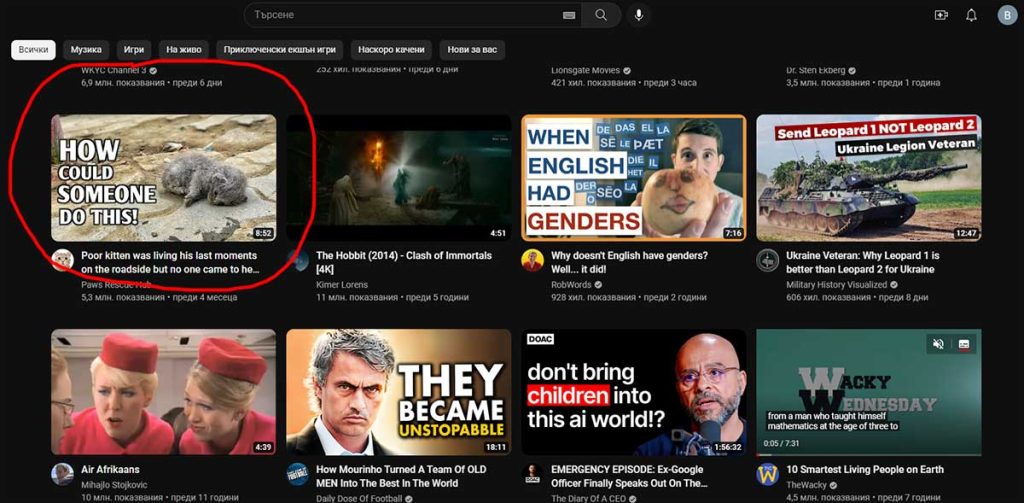
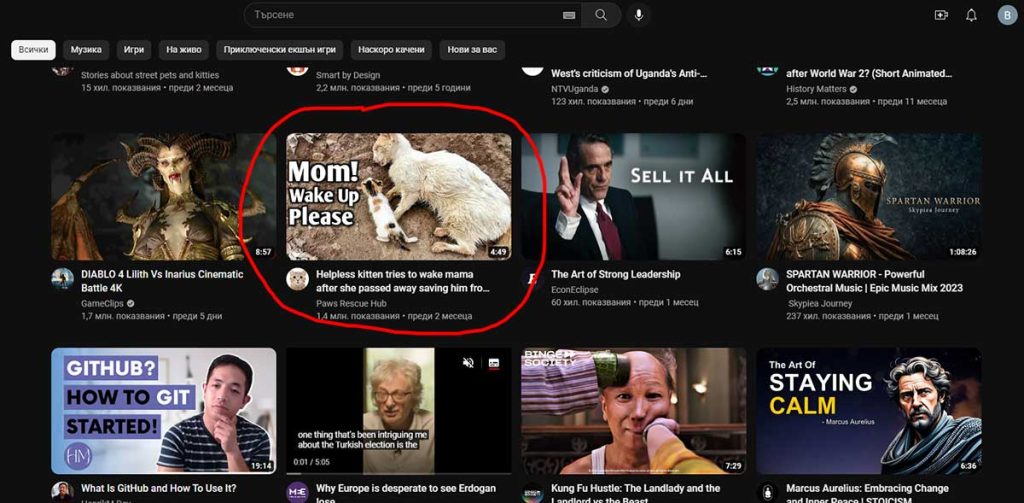
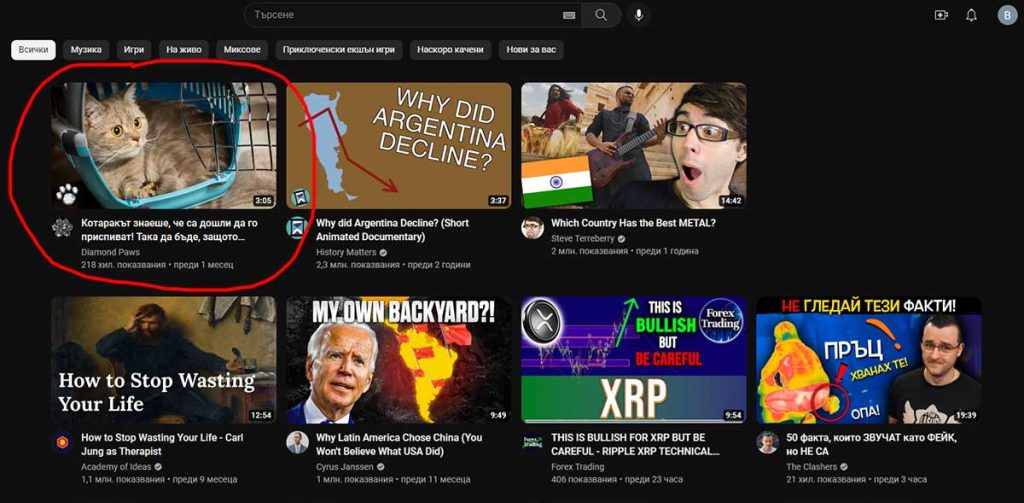
This concludes the verbal part. If anyone wants to see more examples of these traumatic cat videos—and has the nerves for it—they can scroll down.










No comments yet. Be the first!