



Text and Context
4 January 2026

We’ve all heard that words can be bullets. What is less obvious is that these bullets can be selective. This is possible because every piece of information is perceived through the prism of an individual context—the mental state or psychological setup of the person receiving it.
If the information comes in the form of text, then the individual’s situation, condition, and emotional state function as its context. Words, acting as bullets, can therefore wound those who have already been primed to be vulnerable. This priming happens through prior influences that induce a certain state in the individual—creating a psychological context, tuning them to a specific frequency.
This is most effective when the influences are aligned with the individual’s psychological profile and target their weak spots: fears, insecurities, complexes, doubts. These weak spots can be linked to specific words, creating anchors. Later, these keywords can be presented anywhere—in everyday speech, in troll posts, in journalistic texts—and they begin to affect the individual like buttons on a remote control.
There is much more that could be said on the subject, but in keeping with the concise, blog-style format here, let’s move to the core of the idea. The example below cannot include your psychological profile—I am not Google, after all 🙂—but it should still illustrate the mechanism.
For now, simply read the text below.
Text 1
The current situation in society and the state requires that we accept reality first and foremost as it is. The main task before us, as fully functioning individuals, is to clean the trash out of public life, so that we are no longer forced to encounter it everywhere—in institutions, at work, on the streets. And this is miserable.
Because the truth is that it poisons us. It poisons our everyday lives and our future. Until we deal with this, our horizons will always remain narrow. We need to be clear about the facts, and the fact is that the ugliness of certain social anomalies interferes with the normal functioning of social processes.
This is visible even in the most trivial situations, such as walking down the street. We are forced to cover our noses because of the stink coming from overflowing garbage containers, spilling onto the sidewalks—where they clearly do not belong. This sense of disgust is completely understandable for a normal individual who wants to live in a beautiful urban environment instead of a filthy, abnormal pigsty.
We cannot keep walking down the street kicking trash around while stray mongrels scatter it everywhere! It is high time that someone simply cleaned it up!
The dysfunctional performance of municipal services is due to the deep sleep of their employees. They must be woken up and finally made to face the reality of the city. And if they refuse to open their eyes to the facts, they will prove that they are nothing but incompetent individuals who are good for nothing.
Many citizens believe that, in its current form, the municipal sanitation department is a complete farce, making one mistake after another—and that this cannot go on any longer. There is widespread negative sentiment toward the director of this department; some less delicate expressions on social media describe him simply as a clown who doesn’t know his place and who has turned the city into “shit.” According to these comments, the working methods he imposes are outdated and, I quote, “old and worn out.”
It is a fact that citizens are fed up with the lame excuses offered by those responsible for the misery surrounding us. If they feel worn out and obsolete, they should retire instead of further infecting the urban and social environment with their inactivity. Their stubborn insistence on staying where they do not belong is pitiful. For the sake of their own selfish comfort and the convenience of their office chairs, these career-chasing bureaucrats accumulate public contempt on a daily basis.
To conclude, let us once again accept the facts as they are. The ugliness of our surroundings should push us toward action—toward cleaning up the trash, both on the streets and within the institutions. This may sound exaggerated to some, but the truth is that anyone who remains passive in the face of ugly reality assumes the role of a nobody, and their refusal to participate in the cleanup amounts to participation in the collective suicide of civil society.
I hope you have read the text. You probably found it similar to a standard journalistic article, or perhaps the appeal of an outraged citizen drawing attention to current urban problems and calling for civic engagement and intolerance toward them.
Take a short break—half a minute, or a minute.
Now take a breath, scroll down, and read the next text slowly and carefully.
Warning: it will not be pleasant.
Text 2
It’s time for you to open your eyes to REALITY as it truly is. Time to WAKE UP, so to speak. The truth is that you are complete TRASH. You know that, don’t you? Of course you do—you’ve just buried this TRUTH deep inside your MISERABLE little soul.
Because it POISONS you.
You know you are a NOBODY. A PATHETIC, OLD, USELESS LOSER. WORN-OUT, DECAYED, SICK OLD FAILURE. An INCOMPETENT nobody who is GOOD FOR NOTHING. You know you are a PITIFUL SHORT-DICKED JOKE that everyone walks past, turning away in DISGUST.
You know this, don’t you? You couldn’t have missed it.
You also know the undeniable FACT that you are a FREAK, an ANOMALY. You are so UGLY that even your own brothers—the STRAY MONGRELS—keep their distance. Mirrors cry when you look into them. People see you as a MISTAKE, an ERROR of nature.
If anyone pays attention to you at all, it’s only to KICK you aside. At best, you are worthy only of PITY. Women laugh at a CLOWN like you without even trying to hide their CONTEMPT. The thought of running into you on the street makes them shiver with REVULSION, and instinctively pinch their noses.
Because you STINK.
People are amazed that such an INFERIOR CREATURE as you could have any pretensions at all. It is perfectly understandable that they are angry that you DON’T KNOW YOUR PLACE—and your place is DEFINITELY NOT among people!
Someone should CLEAN UP trash like you. You are simply NOT NORMAL. You may think you’re human, but you’re just a rare, foul-smelling, SELFISH PIECE OF SHIT.
You have no past. No present. No future.
Accept REALITY about yourself, no matter how bitter it is. You cannot go on living like this.
Be merciful to yourself.
KILL YOURSELF.
Did you read it? It probably felt unpleasant, and I apologize for that.
Now I ask you to read the first text (Text 1) again—slowly and carefully. Pay attention to how you react to the sentences. Observe your emotions. Then scroll down and continue.
Did you react differently to the dull journalistic text this time? Were you irritated by the words and expressions used in it? Did you feel discomfort?
If so—again, my apologies—you were primed by Text 2 to perceive the expressions in Text 1 as personal and directed at you. This happened because Text 1 contains the same insulting words, but placed in a neutral context. Text 2 transforms that context into a personal one by addressing those words directly to you.
In other words, Text 2 became the context through which you perceived Text 1 during the second reading. It influenced your interpretation and caused the epithets in Text 1 to associate with you.
This is how words can act selectively.
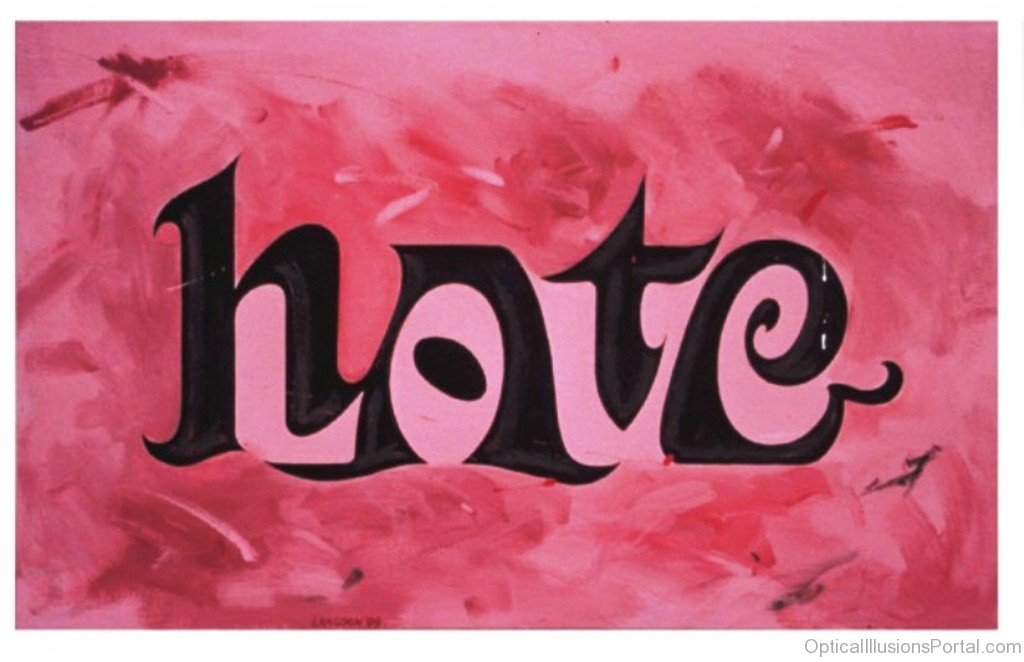
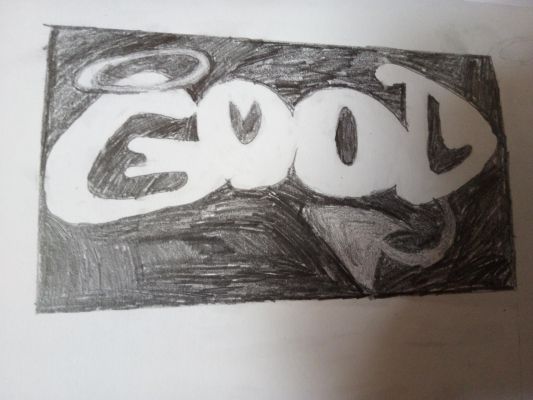
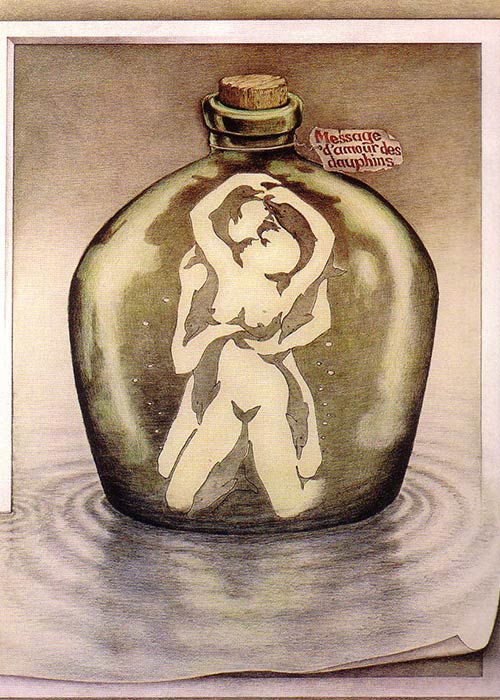
And yes—this technique is used in many situations and variations. It does not apply only to texts. It can work through images, human behavior, gestures, songs and melodies, lines of dialogue, objects—through anything we can perceive and associate with ourselves or with a particular context.
Usually, these methods are combined.
For example, instead of Text 1 there could have been photographs of unpleasant people—drunks, madmen, criminals—who could be described using the epithets from Text 2. After reading it, you might have perceived the images differently when looking at them again.
We live in times when reality hides between the lines. Hypocritical, undignified times, where below-the-belt blows are not only normal but an obligatory and profitable strategy for more and more people and organizations.
Over the past decade, psychology has been militarized—turned into a weapon. A weapon that works invisibly, silently, and without proof, in the interest of those in power.
And sometimes, it inflicts wounds that do not heal.
Only understanding how these weapons work can render them ineffective.





No comments yet. Be the first!