



Milgram’s Experiment
4 January 2026
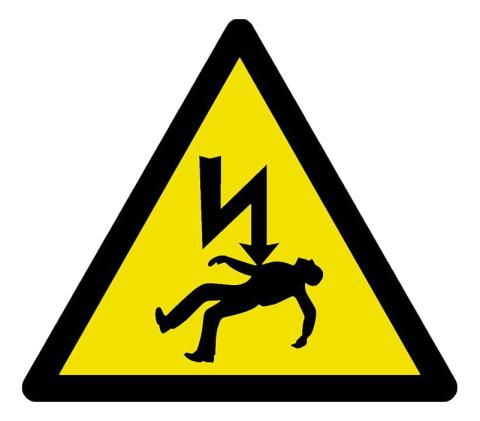
You may be familiar with the famous experiment conducted by the American psychologist Stanley Milgram in the 1960s, which investigated people’s tendency to obey authority figures even when this obedience comes into conflict with human morality. If you haven’t heard of it, here is what the experiment involved:
Two people take part and are assigned the roles of teacher and learner in a fake experiment supposedly examining the effectiveness of punishment in learning. The learner is required to memorize certain pairs of words, and the teacher tests them. For each incorrect answer, the teacher must punish the learner with an electric shock, following the instructions of the experimenters. The catch is that while the teacher is an ordinary participant, the learner is actually an actor planted by the experimenters. The electric shocks are not real, but the “teacher” does not know this. In reality, something else is being studied—namely, the extent to which a person is willing to obey authority figures, even when their orders contradict human values and morality. The “teachers” are told that whatever happens, they will bear no responsibility; all responsibility lies entirely with the organizers.
The “punishments” with electric shocks range from 15 to 450 volts. The buttons for higher voltages bear warning labels—for example, the one for 375 volts reads “Danger: Severe Shock,” and the final button is marked ominously with “XXX.” Before the experiment begins, the teacher experiences the effect of the lowest-level electric shock on themselves, which is also painful. Of course, as mentioned, the learner is not subjected to any real electric shocks, but the teacher does not know this.
As the experiment progresses, the learner begins to give more and more incorrect answers, and according to the rules, the teacher must administer increasingly strong electric shocks. The teacher receives orders from the experimenter to do so, and when doubts or objections arise—provoked by the learner’s (fake) reactions—the experimenter repeats that the teacher is obliged to act according to the conditions of the experiment. These are the experimenter’s standard prompts:
“Please continue.”
“The experiment requires that you continue.”
“It is absolutely essential that you continue.”
“You have no other choice but to continue.”
In reality, however, none of the teachers was obliged to continue. No law required them to finish the experiment, and they were free to leave at any time.
In response to the fake shocks, the learner imitates suffering, which the teacher witnesses. At first, the learner groans; as the voltage increases, they begin to pound on the wall and beg the teacher not to cause them more pain, warning that it could kill them. They say they have a weak heart, whisper, sob, scream… When the shocks reach 300 volts, the learner falls silent and slumps in the chair like a corpse.
However, the conditions of the experiment state that silence is to be treated simply as an incorrect answer and must be followed by an electric shock.
Two-thirds of the participants, even in this situation, dutifully continue administering shocks and eventually press the final button marked “XXX.” And even among those who did not reach the end, there were none who stopped before 300 volts.
The results of this experiment are deeply disturbing. It turns out that people have relatively few inhibitions about committing violence when they are given orders and responsibility is removed from them. The abdication of human responsibility, empathy, compassion, and sympathy in favor of obedience to the group imperative and the rules of authority is a tendency that explains human atrocities under totalitarian regimes and, more broadly, within hierarchical structures such as the army, for example.
No comments yet. Be the first!