



Trust a Friend
2 January 2026
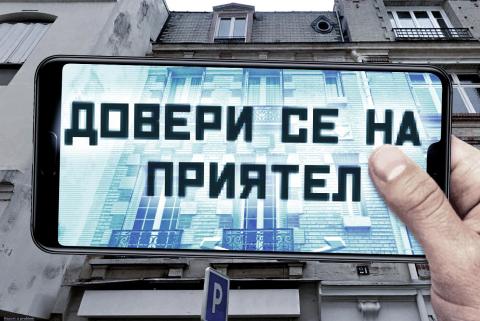
Paris was forcing itself into Philip Kozlovski’s mind without brakes, and it made him dizzy. The associate professor couldn’t tell whether that was due to the early morning flight and the lack of sleep, the summer heat and the humidity rising from the Seine, or perhaps the particular magic so many people attribute to this city. The classical shapes and details around him spilled into his consciousness like an impressionist painting—stylish façades, cozy cafés, careless passersby walking unhurried under the shadows of trees, creating a sense of ease in spite of the accelerated pulse of time.
And yet beneath that bright layer another picture revealed itself—stricter, darker, saturated with history and human fates. Philip felt a desire stirring in him: to see himself as a stroke inside Paris’s multidimensional canvas, full of nuances, light and shadow.
“Clichés,” he pinched himself and snapped out of the spell.
Were these truly his thoughts and feelings—or mere self-suggestion, a compilation of the banal images people build when they’ve never seen the city? As a man initiated into the humanities, Philip had a tendency to philosophize about such things. Without finding an answer, he decided he would at least try to perceive the city without prejudice, without cliché-filters.
Of course, that was impossible.
He was here for the first time, in a city hosting a world conference titled “Human Beings, Society, and Digital Technologies,” held from July 15 to July 20 at the Sorbonne University.
Philip Kozlovski—or more precisely, Associate Professor and Doctor of Sociology Philip Kozlovski—had been invited as a special participant. In that capacity he had prepared a report expressing his deep concern about the uncontrolled, unregulated invasion of digital technologies and algorithms into human life, and about their unclean alliance with psychological disciplines. In his view, the resulting automation and standardization of relationships and social orders would drain meaning from the individual and from society as we know them, and would produce dystopias far more terrifying and unimaginable than those described in the well-known novels on the subject.
Given that Dr. Kozlovski was a respected member of the international academic community, his talk was expected with interest—by scholars and by the media alike.
He was walking along some boulevard, his thoughts darting between first impressions of Paris and his upcoming appearance at the conference, which was about two hours away. He had just left his hotel near Place d’Italie, intending to reach the Sorbonne University on foot. His gaze moved over people and façades, adding piece after piece to the slowly forming mosaic of his mental image of this revered, still unknown city.
It was truly hot. At least 35 degrees, Philip decided, and checked his watch: 11:15. He pulled a paper tissue from his pocket and dabbed the sweat from his forehead. His slot began at 13:30. He had enough time to get there, rest, and freshen up. There was no need to rush, which meant he could allow himself a detour through quieter side streets, slightly away from the glossy tourist façade.
Perhaps it was a naïve attempt to touch the city’s soul, but in any case the calmer atmosphere would help him focus before the event. It was normal to feel a little nervous.
The personal assistant installed on his phone was a guarantee he wouldn’t get lost in the “Parisian hidden corners.” Yet as someone who mistrusted the unchecked intrusion of the digital world into the human one, Philip felt a guilty discomfort whenever he had to use it—discomfort born of trusting algorithms and databases, of becoming a dependent client of the very forces he fancied himself opposing like an unbreakable bastion.
At least in his own eyes.
He tried to dampen that discomfort by keeping distance—by instructing the assistant to address him formally, as vous. That way he kept the relationship cold, not friendly; he didn’t let the assistant inside the way most people did, opening their souls to calculating non-human algorithms disguised as personal guardian angels. And he used it only in extreme cases.
Being in an unfamiliar city with a schedule to follow counted as an extreme case.
So, quieting his conscience, Philip looked at the smartphone screen and the writhing blue snake over a fragment of the city map—helpfully showing the route to the Sorbonne University. He could improvise, of course; the markings would adapt, always pulling him toward the set destination.
“How long will it take to get from here to the Sorbonne?” Philip spoke to the phone absentmindedly, forgetting the duration was already displayed.
“This route will take forty-three minutes and twenty-five seconds at the average pace typical of you, assuming no unforeseen stops or detours,” the assistant replied in a neutral male voice, while also printing the words on the screen. “Would you like additional information about your location?”
“Yes,” Philip answered after a short pause, “something general.”
“At this moment the air temperature is 36.6 degrees Celsius. Humidity is 87 percent. Paris is located on the Seine River, northern France, in the Île-de-France region, in the center of the Paris Basin, at an average elevation of 65 meters. The territory of Paris also includes—” the assistant droned monotonously, until Philip cut him off, irritated:
“Enough. That’s enough!”
“Were you expecting different information?” the assistant asked.
“Maybe,” Philip said. “It doesn’t matter.”
“The currently available volume of communication with you does not allow the construction of a reliable model for predicting the character of your needs in a given context and situation,” the assistant sounded as if he were explaining himself. “To improve this model, more intensive communication between you and me is recommended—meaning the self-learning software algorithm based on neural networks,” he finished.
“Fine. I’ll call you later,” Philip ended the exchange dryly.
He looked around. He was walking on a street with many trees forming a green vault overhead; to the left an elevated railway was visible. A road sign indicated the direction toward the Catacombs of Paris. A billboard in front of him displayed the famous painting by Eugène Delacroix, Liberty Leading the People, where a woman with bared chest and the French flag leads revolutionaries over a carpet of corpses.
What was new was a male hand in the lower foreground, wearing a ring, holding a lit cigarette; its smoke blended elegantly into the colors of the painting. It looked like the hand belonged to someone calmly enjoying the battle scene.
Philip managed to read only “Cigarettes Liberté” and the word “revolution”—just an ad for some local brand. He couldn’t translate the rest; his French was nearly nonexistent. Still, he couldn’t resist the temptation to ask his unrespected helper for assistance. He pointed the phone camera at the billboard, and almost immediately the LCD screen showed: “Freedom Cigarettes. Light the fire of revolution!”
Philip turned his head away in disgust. Apparently the legal, cultural, and ethical barriers restraining profit into acceptable norms were falling one by one under the pressure of capital and advertising.
“Freedom cigarettes…” Philip grimaced. “More like the freedom to die of cancer,” he added sarcastically. That reminded him of something else: lately, for reasons unknown, personalized ads online had been bombarding him with cigarette promotions, even though he had quit many years ago. In spite of closing those banners, the algorithms refused to understand his dislike of smoking and stubbornly kept pushing the “lifestyle,” as if expecting he would eventually surrender to their calculated persistence and return to an old vice.
His eyes happened to land on a woman leaning on the metal railing of an open second-floor window in the building to his right. She stared vaguely ahead and… smoked. The façade looked grimy, smoked-over. Dirt, dust, and probably exhaust fumes had accumulated over the years inside the architectural grooves—not like noble patina, but like soot and stale smoke, adding nothing to beauty.
Philip smiled crookedly and looked away, toward the street where a line of cars exhaled through their tailpipes as they waited for the light.
In the same smoky key, an outdoor clock he noticed hung over the display window of a cigarette shop.
“It’s already 11:30,” he noted to himself, reading the red digital numbers. Should he turn into the quieter side streets toward the Sorbonne to the north—or continue along the boulevard toward the Catacombs a little longer? The blue route snake continued two or three blocks ahead before turning north.
He looked right, toward the first side street promising immersion into a more authentic, less perfumed atmosphere, then looked ahead along the boulevard, where thirty or forty meters in front of him workers on ladders were mounting a large video billboard onto a building façade.
Philip decided to trust the navigator and continue forward.
A small green shoot—some plant, growing between pavement tiles, daring to violate their simple geometric order—caught his eye.
“A shoot that definitely doesn’t know its place,” Philip smiled inwardly. Then he noticed a bench a meter away. An invitation for a short break. He sat and stared at the stubborn shoot. The sticky heat seemed to dull his thinking, and he remained in quiet contemplation for a time, refusing to burden his head with even stickier thoughts and unnecessary philosophy—at least for the moment.
His attention, by all the rules of Eastern meditation, was fully concentrated on that tiny plant that had suddenly grown to the borders of his consciousness.
Something made him raise his head and look toward the boulevard. It happened exactly a moment before the video billboard, in slow motion, smoothly separated from the wall and began falling.
The fall lasted an unclear amount of time—maybe a second, maybe an hour, at least subjectively—until the billboard struck the ground and exploded into thousands of dagger-sharp pieces of glass and plastic shooting in all directions. Only afterward did the sound catch up: a scrape, a crash.
Fortunately, none of the fragments flew near Philip, who had the luck to sit at a relatively safe distance.
For a moment there was silence. Then the shouts and exclamations of pedestrians rose; the hurried voices of the workers barely registered under the noise. Thankfully, no one was hurt.
“Sloppy work,” Philip thought, brutally ripped from his trance. “Even back home this wouldn’t happen,” he shook his head and stood. And then a question struck him: what would have happened if he hadn’t stopped because of that tiny shoot, and had kept walking along the blue snake route—passing exactly there, before turning north toward the Sorbonne?
For an instant, the summer heat gave way to a cold springing from inside.
Philip turned down the first side street toward the Sorbonne, trying to swat the thought away like an annoying fly.
About two kilometers to the northwest, Farouk was sweating in his taxi. The air conditioning was broken, and the hot air rushing through the open window offered little relief. It was 11:35, which meant it was absolutely time for a hot döner and a cold cup of ayran at one of the many Arab places in central Paris. Farouk had instructed his mobile assistant to fill the cab with some mix of Arabic disco and pop-folk, loud enough to make not only the cabin vibrate but the air ten meters around it.
From the taxi ceiling, the photo of his only son—so far—watched him, swaying in rhythm with Farouk’s neurotic driving. As a relatively new taxi driver in Paris, he still hadn’t memorized the tangled web of streets meeting at strange sharp angles unfamiliar to most cities. But there was no problem; that was what assistants were for.
Farouk spat out an exotic Arabic curse. Another traffic jam. The line of cars crawled, stopping every few seconds to take a well-earned rest of several minutes. His smartwatch beeped—his pulse had jumped again. And so had his blood pressure. If anything was reassuring, it was that cheap smartwatches weren’t widely trusted to measure that reliably. Farouk didn’t pay much attention to the alarming indicators on the tiny screen.
In any case, the heat was melting the last remnants of his cool-headedness and stoicism, and the jam was stretching his nerves to tearing. A cup or two of cold ayran and a spicy döner would patch things up—if only he could escape this damned jam sooner. His assistant showed plenty of places in the direction of the Latin Quarter where he could stop briefly.
After Philip turned into the first side street, he felt calmer. The unpleasant incident began to fade, matching the quieter atmosphere of an ordinary neighborhood street. In places, old buildings mixed with simpler modern blocks that didn’t ruin the scenery too much. On the windowsill of one building lay an unbothered calico cat, posed like a small sphinx, arrogantly surveying passersby from the height of the second floor and its own noble ancient origin.
Driven by a sudden impulse, Philip pointed his phone camera and asked the assistant what it could tell him about the building. In a fraction of a second it informed him the building was constructed in 1734 by a man named Gilles Beaumont, later renovated multiple times, passed through many owners, and was currently owned by one of the few real-estate monopolists in Paris, who rented it out.
“Can I help you with anything else?” the assistant concluded.
Philip’s jaw dropped enough for swarms of flies to enter.
Probably due to irritation at the unexpectedly thorough answer, the question slipped out of him: “And what can you tell me about the cat on the sill?”
The tone was ironic and provocative, as expected.
The answer arrived in under a second.
“The cat’s name is Pipa. Female, seven and a half years old. Breed: calico. Last treated for parasites five months ago. Has given birth once. Owners are retirees living on the second floor of the building.”
“Can I help you with anything else?” the assistant ended as usual.
Philip felt his steps grow heavy.
“Where did you get that information?” he asked in a hoarse voice.
“The information is obtained by cross-referencing databases through cloud server services,” the neutral male voice replied.
“Doesn’t that violate the laws protecting personal data?” Philip asked uncertainly.
“Following European Union Directive 2025/1034, such data no longer fall under the protection of the General Data Protection Regulation, both on the territory of the French Republic and across the European Union,” the assistant answered evenly.
Philip bristled. Absorbed in theory and philosophy, he had lost sight of how processes were developing in real life—and that development suddenly felt frightening.
He wiped sweat from his forehead and continued forward in silence. His watch read 11:45.
The traffic jam continued. Farouk advanced at caterpillar speed. On top of everything, the phone feeding the car’s sound system began cutting out for unknown reasons, chopping the echoing pop-folk in a maddening stutter. That added a few more gigajoules of negative energy to the high-voltage tension in his head—enough to power the taxi for the day, if the taxi were electric, which it wasn’t. It was a slightly rattly gasoline Renault.
Farouk tried to calm himself by tracking the taxi’s progress by the sidewalk tiles. Tile by tile the car approached the light. At last he lived to see the end of the row of tiles touching the curb at the intersection.
At 11:52, his phone’s sharp alert tone made him jump.
A customer request.
“Khara!” Farouk swore angrily, already tasting the promised döner. Of course he could refuse the ride, but in this business, with this competition, refusing was like spitting on your luck.
He looked at the screen: the customer was in the direction of the Sorbonne. With a sigh he confirmed the request.
The light turned green, and Farouk felt as if he launched forward with dirty gas.
While Philip walked the neighborhood alleys for some time, nothing special happened. Then, perhaps to keep its owner from boredom, his smartphone suddenly decided to go mad—as if it had abruptly “given up.” Screen flicker, image distortions, blinking were accompanied by chaotic sounds and vibrations. That frightened Philip most because he had no other navigator. And it would be more than unpleasant to lose communication right before the conference.
His subjective sense of heat jumped by at least ten degrees. Dark sweat patches began appearing under his armpits, and with the sweat, the last scraps of calm and good mood seemed to leak away. Restarting the phone didn’t work, and time appeared to accelerate in flight.
11:57.
Philip unconsciously quickened his pace while shaking the phone and jabbing the restart button. The wave of uncertainty reminded him how dependent he was on the gadgets he tried to protest against. So he exhaled in relief when the damned phone suddenly came back to life and the familiar screen appeared.
Exactly 12:00.
The blue snake route led him to a larger cross street. Philip instinctively sped up. Across the street he could see a modern business building with a glossy mirrored façade, splitting sunlight into shards of glare that stung the eyes. Squinting, Philip stepped onto the asphalt.
He didn’t even manage a second step before the phone emitted a loud notification sound…
Farouk’s taxi was heading toward its customer at a speed definitely above the limit—slightly worrying given the upcoming ninety-degree turn and the lack of visibility. Before the turn, on the left side of the street, rose a tall building with mirrored windows. Farouk threw a quick glance at the navigator, which had offered the shortest route. It showed no traffic after the turn.
That contributed to his dismissive attitude toward safe driving. He eased off only slightly before the maneuver.
As Farouk took the turn, the Arabic disco cut out for a fraction of a second, then returned somehow louder. Small as it was, it affected his concentration in the context of his current neurotic state. At the same time, a random reflection from a window on a building farther ahead after the turn blinded him for an instant.
Still, he managed to see a rushing delivery van from the left and jerked the car slightly aside. His reflex worked perfectly there.
But two reflexes cannot fire at once. Milliseconds later, Farouk’s taxi struck a pedestrian crossing—someone his panicked mind hadn’t registered until that moment.
The body hit the front of the car with great force, then slammed into the windshield, which cracked. The person flew upward and sideways…
In the reflection on the new business center’s flat mirrored façade, the old building looked worn and smoked-over. Its ornate decoration—ornaments, bas-reliefs—told stories that no longer moved anyone. Its peeling aesthetic seemed slightly out of date. A sentimental echo of past times, reflected in the calculated, polished functionality of the present.
Where nothing was excessive.
Two police cars stood in front of the modern building with mirror glass. Traffic was blocked, and a stressed crowd had gathered; exclamations and fast, excited speech rose from it. Twenty or thirty meters down the street a dented taxi could be seen, having knocked down several sidewalk posts before being stopped by another.
The taxi driver, apparently Arab, crouched by the car, holding his head and staring at the ground without moving. He was clearly in shock. Two male officers and one policewoman stood beside him, faces blank, barely looking at him.
A few other officers had gathered near the middle of the street. There, a human figure lay motionless in a twisted, unnatural position. Around the head a large pool of blood had formed, spreading into cracks in the asphalt.
From the officers’ tone and expressions it was clear: the person was dead. They were probably waiting for the ambulance to arrive so medical staff could officially pronounce death.
One officer wearing gloves bent down and picked up a smartphone—clearly the dead person’s. The screen was cracked, but the phone had survived the impact and still worked. Before sealing it in the evidence bag, the officer stared at the screen. Despite the cracks, he could read the text:
Can I help you with anything else?
Boyan Taksirov
No comments yet. Be the first!