



In the Name of Security
2 January 2026
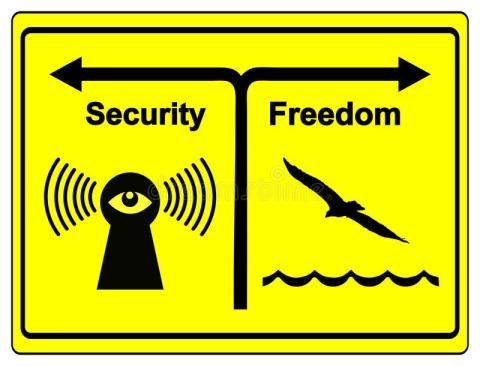
As we have seen, the need for security is a basic human need, according to Maslow’s hierarchy of needs. This is why people are inclined to make compromises with other needs in order to satisfy it. If we are not confident in our physical safety, we are unable to think about anything other than survival. If we are not secure financially, we will think only about bills and money, we will fear losing our jobs, and this will make us insecure, timid, and susceptible to control. Unfortunately, this state of being is a reality for a large portion of society. That is why topics related to jobs—the creation of new ones, their closure, and the security they provide—never lose their relevance. The same applies to the issue of prices. In more and more countries, people would be more likely to revolt because of rising prices than because of the violation of their civil rights.
Authorities always claim that every restriction they impose on us is in the name of our security. Years ago, for reasons of security, the so-called Patriot Act was adopted in the United States—a law that grants extraordinary powers to the police to spy on citizens and handle their personal data. This happened after Americans’ sense of security was shaken by the events of September 11, 2001 (9/11). It is unlikely that such a law could have been passed otherwise. A large part of this law remains in force today, as it is permanent.
Since then, the so-called “War on Terror” has been declared, which has been used as a pretext for imposing all kinds of police repression around the world and, subsequently, for the gradual transformation of many habits in people’s everyday lives. The use of the term “war” instills a deep sense of insecurity, as it makes people feel as if they are living under wartime conditions. An additional factor that intensifies anxiety and the feeling of insecurity is that this time the enemy is invisible—it is not a specific state or alliance, but could be anyone and be anywhere. There is no way of knowing how this war is progressing, since the phantom enemies remain invisible and covert. The list of terrorist organizations is long—Al Qaeda, the IRA, the ANC, the Kurdistan Workers’ Party, jihadists, and so on—which means that the “enemy” is, in practice, indestructible. This implies that the war will have no end, that it will be permanent, and that societies will have to get used to “wartime measures,” making ever greater compromises with their rights in the name of security. It is a life lived in fear and dictatorship, à la Orwell’s 1984.
At present (2020/2021), the world is blocked because of another “war”—the war against COVID-19. Once again, military terminology; once again, an invisible enemy. The wartime vocabulary imposed by the media—“frontline,” “casualties,” “losses,” and so on—gradually enforces a sense of war. This time it is even more tangible, as the world is locked down and the restrictions are total and universal. And while during the “War on Terror” we learned to carefully sort our carry-on luggage before boarding a plane, now we are learning how to live our lives within four walls. Dictators of the past could only have dreamed of what is being imposed today, almost everywhere in the world.
In the media, reports resemble military briefings and continuously pump hysteria and fear in order to keep society in this state, to remind it that nothing will ever be the same again. And there seems to be no end in sight. We are constantly told that societies will never be the same. The “COVID culture” that is being gradually imposed is a culture of fear, control, isolation, and deprivation, disproportionate in character and scale to the problem it claims to be fighting. As long as this continues, people’s lives and plans remain uncertain. The thinking of many is overshadowed by fear and ambiguity—perhaps to such an extent that a wise thought is forgotten:
“Those who would give up essential liberty to purchase a little temporary safety deserve neither liberty nor safety.”
No comments yet. Be the first!