



Education
2 January 2026
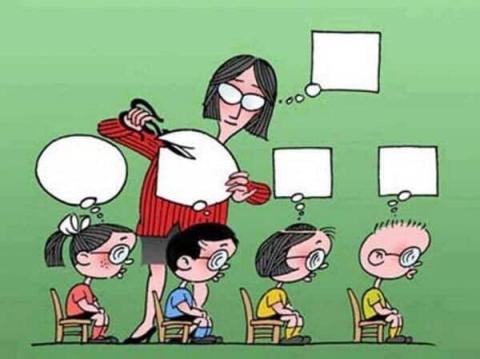
Less Thinking, Fewer Problems
“Ideas are far more dangerous than weapons. We do not allow people to have weapons.
Why should we allow them to have ideas?”
— Joseph Stalin
At the beginning of the 20th century (1908–1909), U.S. President Woodrow Wilson outlined a vision for American education—and for society as a whole. According to him, liberal education, which develops a well-rounded individual, awakens spirituality, and encourages aspirations for fulfillment and self-realization in all aspects of life, should be a privilege reserved for the elite.
For the much larger remainder of society, Wilson envisioned a strictly technical form of education—one that would prepare students for lives as workers and executors of tasks. This class was not meant to cultivate its spirit, live fully, or possess the freedom, ambition, and dignity associated with a developed individual. Its role was simply to obey and perform monotonous technical functions.
During the youth unrest in the United States in 1969, the government commissioned experts to investigate its causes. Their conclusions were striking: the excessively high level and broad accessibility of education had produced a generation with expectations and demands that the system could not satisfy. The system, they argued, primarily needed obedient workers who would not think too much.
The explosive mix of ambitions for personal fulfillment, freedom, and self-determination—when confronted with the realities of the system—had led to rebellion.
From that point on, up to the present day, the quality of mass education in the United States has been deliberately lowered, while the cost of paid education has risen rapidly. The more expensive education becomes, the longer graduates must spend repaying student loans. Beginning adult life burdened by massive debt, they have little choice but to conform and integrate into the system.
Thus, the educated and intelligent segment of society is either co-opted by oligarchic interests or forced to work for them—serving their struggle for power and control over the vast majority of the population, for whom a suppressed life of executors and laborers is intended.
During Donald Trump’s presidency, one of the many criticisms directed at his administration was that it sought to turn accessible secondary education into a vocational pipeline designed to supply workers for business and corporate needs.
Of course, this is primarily an American problem—at least for now. In much of Europe, education remains largely publicly funded, accessible, and of relatively high quality. Still, what is happening in the United States should serve as a warning: when business captures education, it can be used not only as a source of profit, but also as a powerful instrument of social engineering and control.
When it comes to political culture, it is worth examining its connection—or lack thereof—to the educational system. Paradoxically, in most democratic countries, citizens gain the right to vote at the age of 18, without the education system having adequately prepared them to exercise this right.
In what percentage of secondary schools do students actually acquire meaningful political literacy—one that integrates them into civic life and motivates them to defend their rights? Do 18-year-olds possess the knowledge needed to make informed and responsible choices about who governs them, or to recognize the traps set by political demagogues and populists?
Do they even have the patience or desire to read electoral programs—and the understanding required to interpret them? Would many of them vote for pop stars or football idols if given the chance?
This raises a deeper question: in the absence of basic political education, do people gradually develop political awareness over time—or do they remain apathetic, disengaged, and vulnerable to manipulation?
And this leads us to the most important question of all:
Do elites truly need educated, well-rounded individuals—or do they prefer a non-thinking electorate?
No comments yet. Be the first!